_edited.png)
Passover Kitchen Design Ideas: Choosing the Right Glass Enclosure System (Tiara, Momentum, Sliding)
- Privlux Inc.
- Mar 30
- 4 min read

Among the most practical Passover kitchen design ideas is the ability to create clear, controllable separation within the kitchen. During Pesach, this is not simply a matter of preference—it is a functional necessity rooted in the need to clean thoroughly, avoid cross-contact with chametz, and manage workflow efficiently.
Traditional solutions often rely on temporary barriers or full renovations. Increasingly, however, homeowners and designers are turning to glass enclosure systems as a more adaptable and long-term approach. Glass, by nature, is non-porous, easy to clean, and visually unobtrusive—qualities that align well with the demands of Pesach preparation.
Within this category, not all systems function the same. This article breaks down three commonly used solutions—Tiara folding glass, Momentum slide-and-fold glass, and standard sliding glass—focusing on their practical advantages and limitations in a Pesach context.
Why Glass Works for Passover Kitchen Design
Before comparing systems, it is important to understand why glass is increasingly considered in Passover kitchen design ideas.
Glass surfaces are generally non-porous, meaning they do not absorb food particles, moisture, or odors in the same way materials like wood or certain laminates might. This aligns with general food safety principles, where smooth, non-absorbent surfaces are easier to sanitize effectively (U.S. FDA Food Code, WHO hygiene guidelines).
Additionally, glass allows for:
Full visual continuity across spaces
Natural light transmission
Reduced need for permanent structural changes
For Pesach, where kitchens often undergo intensive cleaning and temporary reconfiguration, these qualities become especially relevant.
1. Tiara Folding Glass: Maximum Opening, Full Flexibility
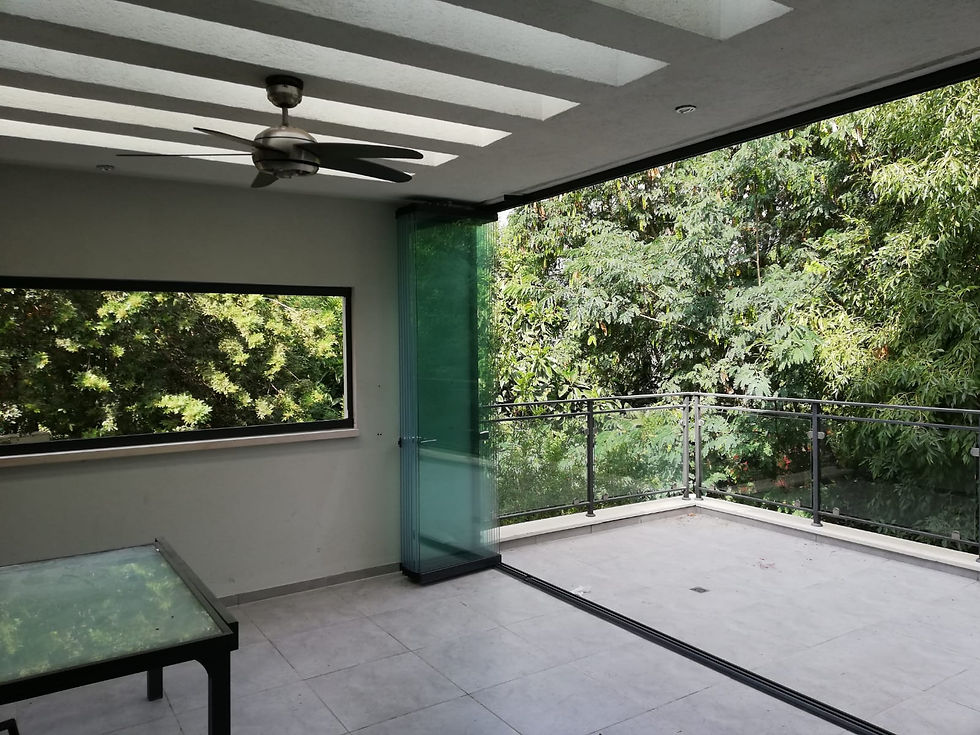
Tiara folding systems operate on a panel-folding mechanism, where multiple glass panels stack to one side, allowing for a near-complete opening.
Advantages:
Full access when needed: Panels can be completely folded away, making it easier to clean all surfaces without obstruction.
Clear separation when closed: Provides a defined physical barrier for Pesach zones.
Adaptability: Can transition between open-plan and enclosed configurations depending on the stage of preparation or hosting.
Limitations:
Stacking space required: When opened, panels need a dedicated area to stack, which may slightly reduce usable wall space.
More components: Hinges and panel connections introduce more moving parts, requiring proper alignment and occasional maintenance.
Higher upfront cost: Typically more complex than basic sliding systems.
Best use case: Homes that want a fully open kitchen most of the year but require complete separation during Pesach.
2. Momentum Slide-and-Fold Glass: Balanced Control and Efficiency
Momentum systems combine sliding and folding functionality, allowing panels to move along a track and stack more compactly than traditional folding systems.
Advantages:
Space-efficient stacking: Panels take up less room when opened compared to full folding systems.
Controlled opening: Users can partially open sections without fully retracting the entire system.
Flexible zoning: Ideal for gradually adjusting space during different stages of Pesach prep.
Limitations:
Track dependency: Performance relies on well-installed tracks, which must remain clean for smooth operation.
Moderate opening width: While flexible, it may not achieve the same full-clear opening as a pure folding system.
Learning curve: Slightly more complex operation compared to simple sliding panels.
Best use case: Kitchens that need a balance between openness and controlled separation, especially in mid-sized layouts.
3. Sliding Glass Systems: Simplicity and Reliability
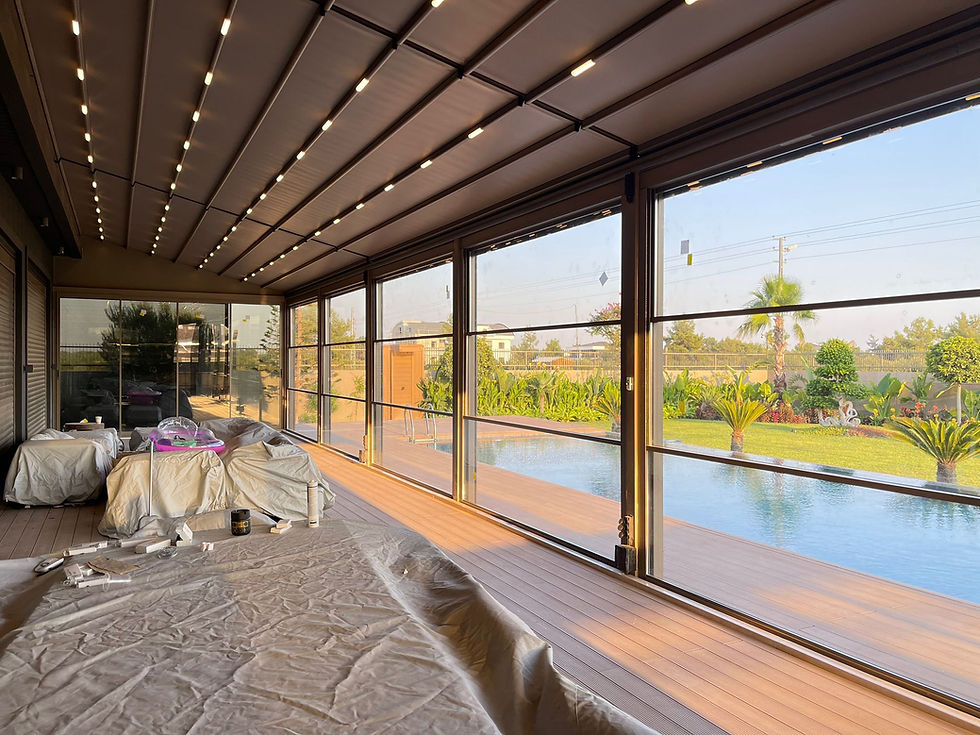
Standard sliding glass systems operate with panels that move horizontally along tracks without folding.
Advantages:
Straightforward operation: Minimal components make it easy to use daily.
Durability: Fewer moving parts generally mean lower maintenance requirements.
Cost-effective: Typically more accessible compared to folding or hybrid systems.
Limitations:
Limited opening: Only part of the opening can be cleared at a time since panels overlap.
Less flexibility: Cannot fully open the space when needed.
Fixed panel positions: May restrict workflow during intensive kitchen use.
Best use case: Smaller kitchens or secondary enclosures where simplicity and budget are primary considerations.

Comparing the Systems in a Pesach Context
When evaluating Passover kitchen design ideas, the key factors are not just aesthetics, but how a system performs under real conditions:
Factor | Tiara Folding | Momentum Slide-and-Fold | Sliding Glass |
Opening Capacity | Maximum | High | Moderate |
Cleaning Access | Excellent | Very Good | Good |
Space Efficiency | Moderate | High | High |
Operational Simplicity | Moderate | Moderate | High |
Cost Range | Higher | Mid-High | Lower |
Each system addresses a different priority—whether it’s full openness, spatial efficiency, or simplicity.
Practical Considerations for Installation
Beyond system choice, several technical factors influence performance:
Track alignment and load distribution: Critical for smooth operation, especially in folding systems.
Glass thickness and safety standards: Tempered or laminated glass is typically recommended for residential applications.
Sealing and edge detailing: Important for maintaining separation effectiveness.
Integration with cabinetry and walls: Ensures the enclosure functions as part of the overall kitchen design.
These considerations are consistent with broader architectural best practices for movable partitions and interior glazing systems.
Passover Kitchen Design Ideas that Actually Work
What emerges from these Passover kitchen design ideas is not a single “best” system, but a recognition that different households require different levels of flexibility, control, and investment.
Tiara folding systems prioritize full openness and transformation. Momentum systems offer a balanced, space-efficient approach. Sliding systems provide simplicity and reliability.
The underlying principle is consistent: a well-designed enclosure should support the way the kitchen is actually used during Pesach—making cleaning more manageable, separation more effective, and the overall experience more organized.
If you’re considering how to adapt your kitchen for Pesach in a way that remains functional year-round, it’s worth evaluating which system aligns with your space and priorities.
For expert advice or a tailored quotation, you can reach out via WhatsApp at 833 774 8589.


Comments