_edited.png)
Pergola Design Trends for Spring: The Return of Semi-Outdoor Living in Modern Homes
- Privlux Inc.
- 13 hours ago
- 4 min read

For years, outdoor design followed two extremes.
Spaces were either fully exposed to the elements or completely enclosed into something that behaved like an interior room. But recently, especially across residential projects in the Northeast, there’s been a noticeable shift toward something in between.
Homeowners are increasingly looking for outdoor spaces that remain connected to nature without being entirely vulnerable to weather conditions. That balance—between openness and protection—is becoming one of the defining pergola design trends for spring.
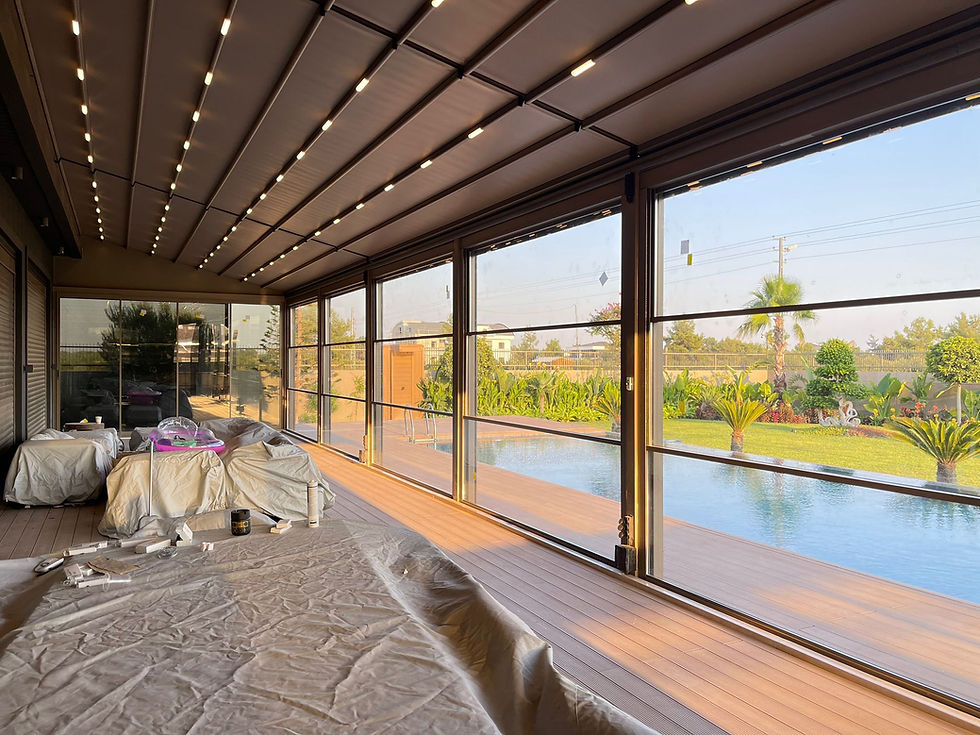
Instead of building outdoor spaces that imitate interiors, many modern homes are embracing adaptable environments: pergolas with operable louvers, non-insulated sliding glass, integrated shades, and flexible enclosures that respond to changing conditions rather than permanently resisting them.
The result is a different approach to outdoor living altogether. Not fully indoors. Not fully outdoors. But intentionally somewhere in between. Here are some of the biggest reasons semi-outdoor living continues to grow in modern homes.
1. Homeowners Want More Flexibility, Not More Separation
One of the strongest pergola design trends for spring is the preference for adaptable spaces instead of permanently enclosed additions.
Many homeowners still want:
fresh air,
natural light,
connection to landscaping,
and open views.
But they also want practical protection from:
rain,
harsh afternoon sun,
wind,
and seasonal temperature shifts.
Pergolas combined with non-insulated sliding glass systems solve this problem surprisingly well because they allow spaces to change throughout the day or season. The space can remain open during ideal weather and become protected when conditions change—without losing its connection to the outdoors. This flexibility has become more valuable than static enclosure.
2. Semi-Outdoor Spaces Feel More Natural
One of the unintended consequences of fully enclosing outdoor spaces is that they sometimes stop feeling outdoors entirely. The lighting changes. Airflow disappears. The atmosphere becomes flatter. Semi-outdoor living works because it preserves environmental variation instead of removing it altogether.
According to environmental psychology research published through the Journal of Environmental Psychology, access to natural airflow, daylight, and visual connection to nature contributes positively to stress reduction, mood, and perceived comfort in residential environments. This helps explain why many homeowners now prefer spaces that still feel connected to weather patterns, seasonal light changes, and surrounding landscapes rather than fully isolated from them. Pergolas with operable roofing and non-insulated glass systems support that balance naturally.
3. Pergolas Are Becoming Architectural Extensions, Not Just Shade Structures
Another major pergola design trend for spring is the evolution of pergolas from decorative backyard features into functional architectural systems. Modern pergolas now often include:
rotating louvers,
integrated lighting,
motorized shades,
sliding glass systems,
drainage integration,
and adaptable enclosure options.
Instead of acting as standalone structures, pergolas increasingly shape how homeowners move between indoor and outdoor areas. This is particularly noticeable in larger residential properties where outdoor spaces are expected to function as:
dining zones,
lounges,
transitional gathering areas,
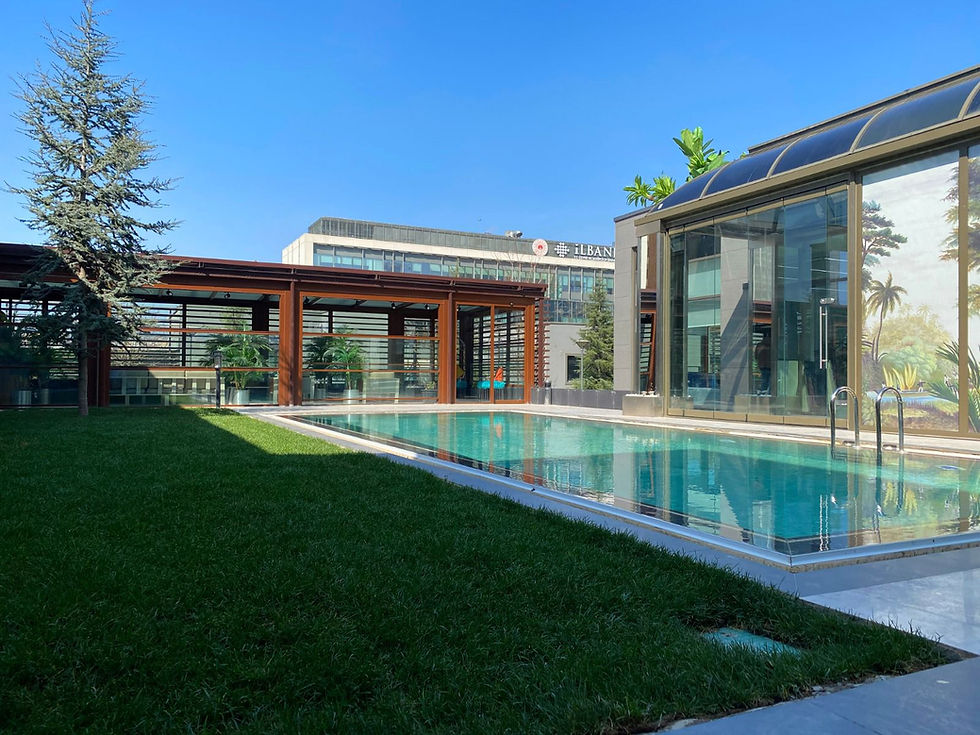
poolside environments,
or multi-season entertainment spaces.
The pergola becomes less about “covering a patio” and more about creating environmental control without fully sacrificing openness.
4. Non-Insulated Glass Works Better Than Most People Expect
One misconception many homeowners initially have is assuming that outdoor glass systems must behave like insulated interior walls. But in semi-outdoor environments, maximum thermal separation is often unnecessary. Non-insulated sliding glass systems work well because they:
preserve wider openings,
reduce visual heaviness,
allow better operability,
and maintain a stronger connection to the outdoors.
This is especially relevant during spring, when moderate temperatures make natural ventilation more comfortable than complete enclosure. The U.S. Department of Energy has long emphasized the value of passive environmental strategies such as ventilation and daylight optimization for improving comfort and reducing mechanical dependency in residential spaces. In many outdoor projects, adaptability becomes more useful than maximum insulation.
5. Spring Highlights the Importance of Airflow
Spring tends to expose problems in poorly designed outdoor spaces very quickly. Areas with insufficient airflow become stuffy. Fully enclosed glass spaces can overheat. Heavy structures sometimes block the very sunlight homeowners were hoping to enjoy again after winter. This is one reason why pergola design trends for spring increasingly prioritize operability. Features like:
rotating louvers,
sliding glass panels,
folding systems,
and retractable shades
allow homeowners to adjust exposure throughout the day instead of committing to one fixed condition. Good outdoor spaces now behave more like responsive systems than static structures.
6. Semi-Outdoor Living Changes How Homes Are Used
One interesting pattern we’ve noticed across residential projects is that semi-outdoor spaces often become some of the most frequently used areas of the home. Not because they are fully climate-controlled. But because they feel emotionally easier to occupy.
There’s something psychologically different about spaces that still maintain:
ambient outdoor sound,
moving air,
seasonal lighting,
and visual openness.
People tend to linger longer in spaces that feel breathable. This may explain why so many homeowners now prioritize experiential comfort over maximum enclosure. The goal isn’t to completely eliminate outdoor conditions. It’s to moderate them enough that the space becomes usable more often.
7. The Best Outdoor Spaces Usually Preserve Optionality
Perhaps the most important shift behind semi-outdoor living is philosophical. Modern homeowners increasingly value optionality over permanence. Instead of asking: “How do we fully enclose this space?” The better question often becomes: “How do we make this space adaptable across changing conditions?” Pergolas with non-insulated glass systems answer that question effectively because they allow homeowners to:
open,
close,
ventilate,
shade,
or protect the space depending on weather and use.
The environment remains flexible instead of fixed. And in many cases, that flexibility creates a better long-term experience than aggressive enclosure.
Getting the Best Out of Pergola Design Trends for Spring
The return of semi-outdoor living reflects a broader shift in how people want to experience their homes. Instead of separating indoor and outdoor life completely, homeowners are increasingly looking for systems that allow both environments to coexist more naturally. That’s why pergola design trends for spring are moving toward adaptability:
lighter structures,
operable systems,
non-insulated sliding glass,
integrated shades,
and flexible environmental control.
The goal is no longer maximum enclosure. It’s usable openness.
If you’re exploring pergola systems or semi-outdoor glass configurations for your property, feel free to reach out to Privlux on WhatsApp at 833 774 8589 for practical guidance or project recommendations based on how the space will actually be used.


Comments