_edited.png)
Guillotine Glass vs Sliding Glass for Outdoor Spaces — A Detailed Guide from a Pergola Supplier in New Jersey
- Barry Lenson
- Feb 27
- 4 min read

When designing outdoor living spaces, one of the most consequential decisions isn’t just the roof or shade — it’s how you enclose or open your space, especially if you live in a climate like New Jersey where seasons vary dramatically. Two dominant choices for enclosing pergolas and patios are guillotine glass systems and sliding glass systems. Both have merits, but their mechanical behavior, weather response, and functional suitability differ in meaningful ways.
As a pergola supplier in New Jersey, we’ve installed, maintained and studied both systems across a wide range of homes and climates. My goal here isn’t to sell you on one — it’s to explain how they work, where they excel, and how to match each to your real needs.
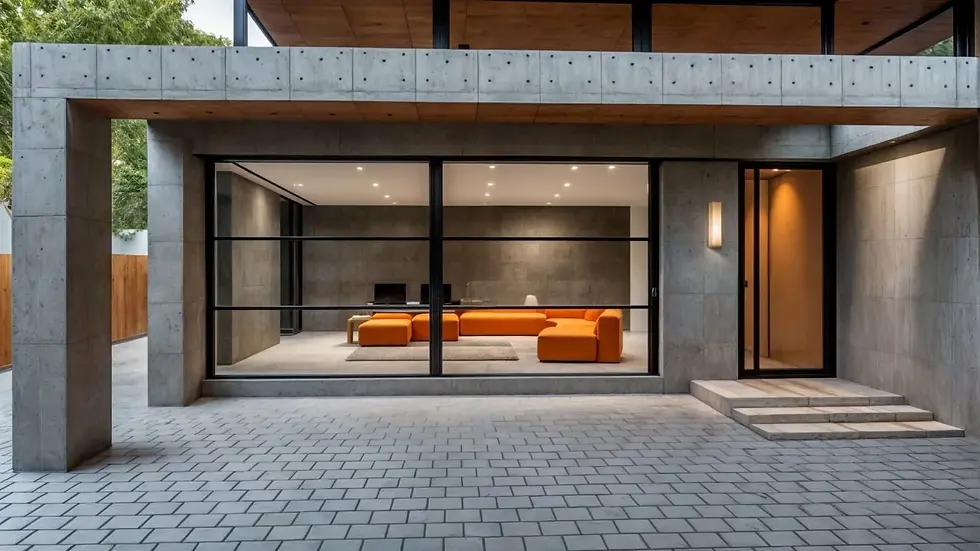
What Is Guillotine Glass?
A guillotine glass system refers to vertical panels that move up and down, typically on tracks with counterweights or motors. The name comes from the controlled vertical motion — similar to a guillotine’s slide.
Key Characteristics
Vertical movement: Panels lift upward into a head cavity or stack overhead.
Weather sealing: Designed with tight seals at edges and between panels.
Full‑height view: When lowered, panels create continuous glass walls.
Operational clarity: When raised, they clear the entire opening without interrupting sightlines.

What Is Sliding Glass?
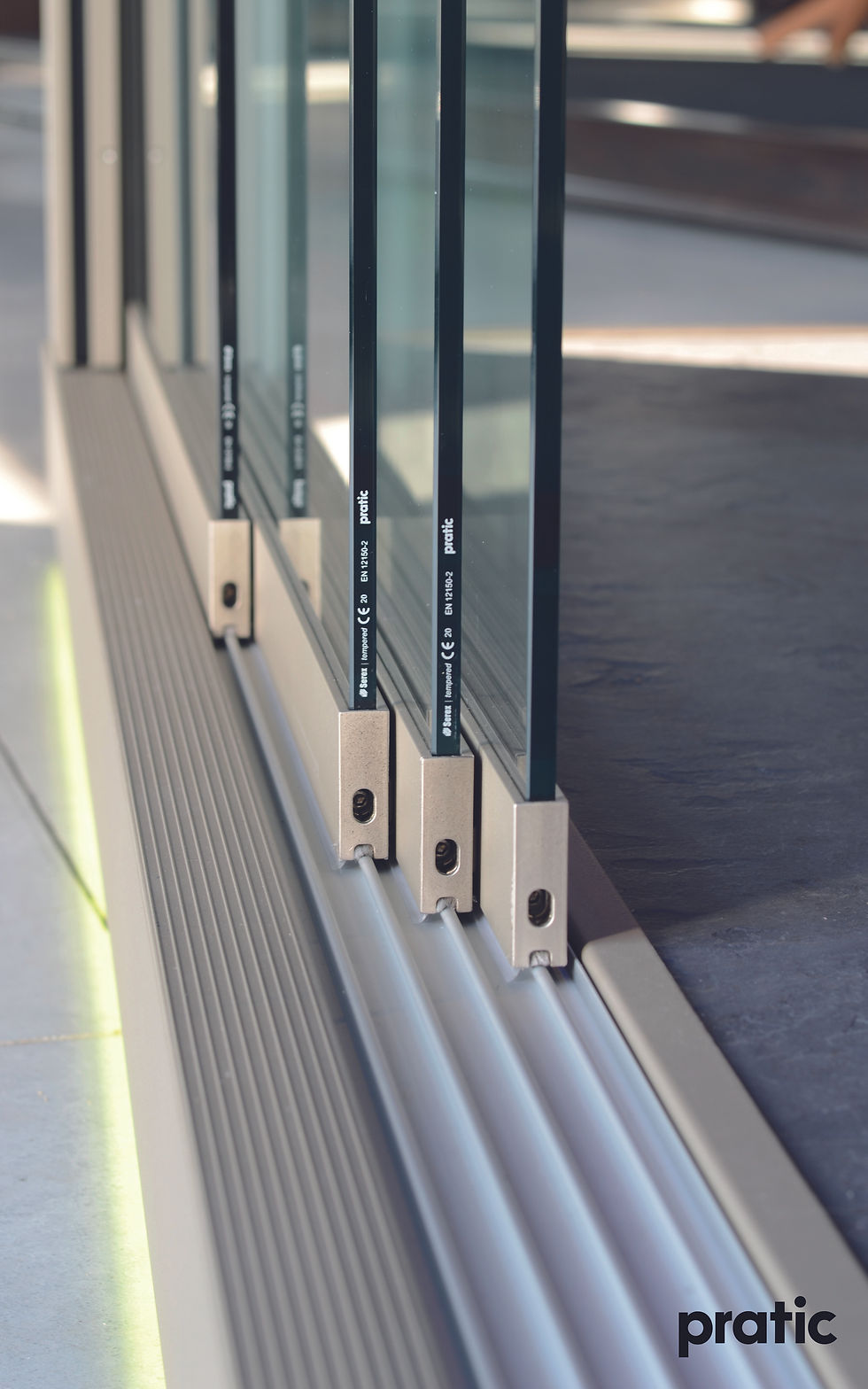
Sliding glass systems move horizontally on tracks. Individual panels slide next to each other, stacking at one or both ends of an opening.
Key Characteristics
Horizontal stacking: Panels slide to create openings.
Partial clear openings: Only part of the wall may open, depending on panel count and configuration.
Track‑based motion: Requires well‑maintained horizontal tracks.
Technical and Functional Differences
Below are the practical distinctions we observe as a pergola supplier in New Jersey — rooted in physics, typical weather exposure, and user behavior.
1. Opening Geometry
Guillotine Glass: Creates a fully unobstructed opening when raised because panels lift straight up and disappear into a top cavity. This clarity is ideal when you want a true indoor/outdoor transition.
Sliding Glass: Creates a partially unobstructed opening. Depending on the number of panels and track length, only a portion of the wall may clear at once.
Practical Impact: If maximizing airflow and unblocked views matter most, vertical guillotine systems often outperform horizontal sliders.
2. Weather Management — Snow, Rain, Thermal Movement
Guillotine Glass: Engineered with vertical seals that compress more uniformly under temperature changes. Because panels aren’t sliding against each other horizontally, thermal contraction in cold climates like New Jersey doesn’t grab or bind the way sliding tracks often do.
Sliding Glass: Horizontal tracks must remain free of debris, snow, and ice. In freezing conditions, sliders are more prone to freezing in place or requiring periodic track clearance.
Practical Insight: For climates with snow and freeze‑thaw cycles, vertical guillotine panels often maintain smoother operation with less user intervention.
3. Structural Load and Wind Performance
Guillotine Glass Systems: When lowered, these systems act like a continuous shear wall, resisting lateral loads (from wind) more uniformly because the entire wall plane is engaged.
Sliding Glass Systems: Wind loads are shared across multiple panels that may not interlock as uniformly. Design can mitigate this, but it’s inherently dependent on track engagement points.
Practical Takeaway: Where wind performance and structural continuity are priorities — such as in exposed New Jersey shore or open‑field properties — guillotine systems often have an edge.
4. Maintenance Expectations
Guillotine: Requires periodic lubrication of vertical tracks and inspection of seal compressions. Motors or counterweights should be checked seasonally in climates with wide temperature swings.
Sliding: Horizontal tracks demand regular cleaning, especially where salt, sand (from winter road treatments), leaves, or pollen are present.
When Sliding Glass Is a Better Fit
Sliding glass should still be considered when:
Architectural style calls for horizontal progression.
You need partial openings rather than full wall retraction.
Budget constraints favor simpler mechanical systems.
Sliding systems have matured and can perform extremely well — they just ask for a different maintenance mindset and user expectations.
When Guillotine Glass Makes More Sense
Guillotine glass is especially compelling when:
You want maximized view corridors with minimal obstruction.
You live in a climate with significant snow and freeze conditions.
Ease of full opening and thermal performance are priorities.
There’s No “Perfect” Glass System: Insights from a Pergola Supplier in New Jersey
Choosing between guillotine glass and sliding glass isn’t about trend or style alone — it’s about understanding how glass behaves in real climates, how people use their outdoor spaces, and how maintenance realities align with daily life.
Both systems have legitimate places in modern design. As a pergola supplier in New Jersey, my recommendation is always grounded in functional clarity and long‑term performance — not marketing buzzwords.
If you’d like to discuss which system makes sense for your home or project, or need expert evaluation based on wind load, snow load, and usage patterns, reach out via WhatsApp at +1‑833‑774‑8589 for advice or a quotation that considers all types of pergolas and glass systems.


Comments