_edited.png)
The Hidden Role of Beam Slope to Have a Waterproof Pergola in New York
- Privlux Inc.
- Aug 15, 2025
- 6 min read

The Hidden Role of Beam Slope in Pergola Water Management
In the world of outdoor structures, “waterproof” is not a marketing buzzword—it’s an engineering commitment. For a waterproof pergola in New York, especially in August when sudden downpours can overwhelm poorly designed systems, the slope of a beam is as important as the quality of the roof material. Many homeowners envision perfectly level pergolas for aesthetic symmetry, but water doesn’t respect visual symmetry—it follows physics. The science of pitch, gutter velocity, and overflow prevention determines whether your pergola quietly sheds water or floods your deck in the middle of a summer barbecue.
Why Slope Matters, Even When It Looks Flat
Beam slope—or “pitch”—is the slight angle built into a pergola’s roof structure to guide water toward integrated gutters and downspouts. Even when a pergola appears level to the eye, a hidden gradient of 1–2% (around 10–20 mm per meter) is usually in place. This subtle slope is enough to create gravitational pull, moving water at a controlled speed toward drainage points. Without it, rainwater pools along blades or fabric, adding weight, stressing the structure, and eventually finding unintended escape routes—usually over your seating area.
In August, New York often experiences sudden storms that can dump more than an inch of rain in an hour. When water collects faster than it drains, the result is gutter overflow. A correctly calculated slope prevents this by increasing “gutter velocity”—the rate at which water moves through the channel—while keeping it below splash-out speeds.
Pitch, Velocity, and Overflow Prevention: The Science
Water behaves predictably under gravity, but small changes in slope can have exponential effects on flow rate. A pitch that’s too shallow allows water to linger, encouraging debris buildup and algae growth. A slope that’s too steep increases noise, turbulence, and wear on seals, particularly in retractable roof systems. For most waterproof pergolas in New York, the sweet spot is around a 2% pitch—enough to keep gutters self-cleaning while minimizing visual tilt.
Overflow prevention also depends on gutter sizing relative to the expected rain intensity. In summer storms, especially during August’s peak humidity, gutters must be capable of handling high volumes while still dispersing water away from the structure’s foundation. Here’s where design meets reality: without a proper slope, even oversized gutters can fail.
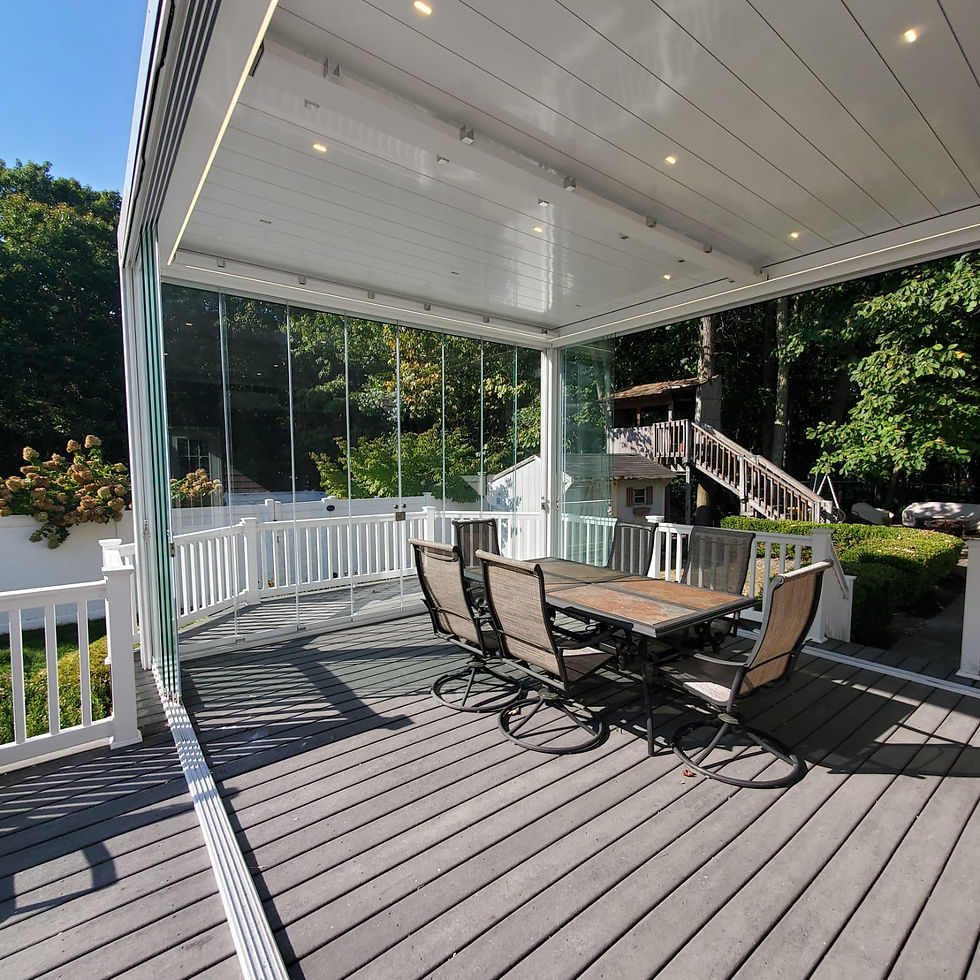
How Slope Applies to Different Pergola Types
The science of beam slope isn’t exclusive to one design—it affects every pergola type in Privlux’s lineup. Each system requires a tailored approach to pitch based on its roof material, drainage path, and intended use.
Carrera (Hybrid Blade Pergola)
Carrera’s 3D roof design alternates fixed and movable aluminum blades at two depths, creating a striking visual effect but also a complex water management scenario. The fixed blades act as stationary catch points, while the movable blades retract above them. To prevent water stagnation, the perimeter beams are engineered with a subtle but crucial slope, ensuring both roof zones—fixed and movable—drain evenly. In a New York August storm, when rainfall can intensify rapidly, this even distribution prevents overflow and protects both the frame and surrounding areas.
Visualize Basic (Divara) – Rotating Louvers for Large Terraces
The Visualize Basic uses innovative rotating louvers to regulate light and ventilation, making it ideal for expansive terraces. From a water management standpoint, the beam slope must be engineered so that rainwater flows efficiently toward the integrated gutters—critical in wide-span installations where even minor sagging can cause pooling. In August storms, the large roof surface area can channel high volumes of water quickly, so installers must ensure precise pitch along both the main beams and the gutter lines to prevent overflow. Optional sliding walls or vertical shades can alter wind and rain patterns inside the structure, so drainage testing after installation is recommended.
Visualize – Adjustable Blades with Minimalist Integration
The core Visualize model combines an all-aluminum frame with blades that rotate up to 140°, allowing full control of light, airflow, and weather protection. When fully closed, the horizontal beam profile conceals a vertical awning that seals the perimeter, which means water must be directed entirely through the integrated gutter system. The slim 10-inch profile leaves little margin for error in slope—too flat and water may linger at the blade junctions before draining. Because the vertical awning can block cross-breezes, installers should account for slower evaporation after rainfall and prioritize drainage capacity in the beam design.
Visualize Plus – Enhanced Insulation and Design Options
Visualize Plus adds design flexibility and thermal insulation to the Visualize platform, with the option of incorporating wood or other ceiling finishes for a warmer aesthetic. These additional ceiling materials can increase overall roof weight, making accurate beam slope and structural reinforcement even more important for proper drainage. Airtight seals and sliding insulating windows improve comfort but can create a fully enclosed environment—great for winter, but in summer storms, this enclosure means that all rain impact must be managed by the roof’s guttering and slope alone. If the slope is miscalculated, water can pool above the insulating panel or decorative cladding, risking long-term damage.
Skyview (Retractable Pergola Roof)
Skyview’s retractable blades create a full-sky opening when retracted and seal tightly when closed. For effective waterproofing, the perimeter beams are sloped just enough to channel water quickly into the gutter tracks without appearing visibly tilted. If the slope is underestimated, rainwater can pool on the blade surfaces before reaching the drainage channels—a risk during August’s sudden thunderstorms. Privlux’s installation process ensures the slope is optimized for both rapid water evacuation and a clean, architectural profile.
LuxShade (Retractable Fabric Pergola)
LuxShade features a retractable cover with a tilting gutter system. The slope here is built into both the beam structure and the gutter tilt, ensuring water moves efficiently off the fabric and into concealed drainage points. In summer heat, a minimal slope avoids distorting the fabric’s tension, while in heavy rain, it accelerates runoff to prevent pooling. New York homeowners benefit from this dual-purpose slope design, which balances visual integration with reliable weather protection.
Uptrack (Inclined Fabric Roof with Internal Post Drainage)
Uptrack is an inclined, motorized pergola with a PVC fabric roof and a distinctive internal-post drainage strategy, so its waterproof performance depends on coordinated slope, tension, and post alignment. Because the cover is pitched, beam slope must be consistent across the entire run so water flows predictably into the hidden channels that lead down through the posts — any local reverse tilt or sag at a joint will interrupt that flow and create a temporary ponding condition on the fabric. This risk is compounded where Uptrack spans are joined (it can run in up to three spans for long covers), so each interface must maintain the same incline and the post inlets must be precisely levelled to accept the runoff. Fabric tension and track geometry also matter: an under-tensioned cover will sag into low points and trap water, while misaligned tracks will abrade the PVC or allow leakage at seams.
Finally, because drainage is concealed inside posts, installers must verify internal channel continuity and access for clearing debris, and consider freeze-thaw behavior in winter — trapped water inside narrow channels can ice and block flow unless outlets and insulation/readiness are planned.
Solidare (Tensioned Vinyl Fabric Pergola)
Solidare’s Soltis® Proof 502 vinyl canopy relies on perfect tautness to prevent sagging. The beam slope works in tandem with fabric tension to direct water into the integrated gutters. Too shallow a slope, and water could strain the fabric; too steep, and the pergola’s clean lines could be compromised. In late-summer storms, the correct slope ensures uninterrupted runoff even when side enclosures are used, keeping the interior space dry and functional.
Designing for New York’s August Weather
August in New York is unpredictable—mornings can start with light breezes and clear skies, only for the afternoon to bring short but intense rain events. When these downpours hit, a pergola’s drainage system is tested in real time. Beam slope is not just about managing water—it’s about protecting finishes, preventing structural strain, and keeping outdoor spaces functional year-round.
Homeowners should be aware that even “visually flat” pergolas have hidden slopes, and that small miscalculations can lead to large problems. In professional installations, slope is engineered during the structural design stage, long before beams are cut or assembled. Retrofitting slope after construction is often impossible without dismantling the frame.

Final Thought: Building a Waterproof Pergola in New York
A waterproof pergola in New York is only as effective as its beam slope allows it to be. No matter the roof type—louvered, retractable, hybrid, or fabric—gravity will always dictate where water goes. By understanding and respecting the physics of pitch, homeowners can ensure their pergola remains both beautiful and functional, even in August’s unpredictable weather.
For a precision-engineered pergola that performs in every season, get in touch with Privlux. We provide pergolas with drainage systems tailored to New York’s climate. Contact us on WhatsApp at 833-774-8589 or email info@privluxinc.com to start planning your weatherproof outdoor space.


Very insightful read on the role of beam slope in pergola waterproofing. The explanation of pitch and gutter velocity really highlights why engineering details matter as much as aesthetics. I’ve also written about outdoor structure design here, which could add another perspective for readers.