_edited.png)
When to Choose Insulated or Non-Insulated Glass for Your Pergola Enclosure — Advice from a Glass Supplier in New Jersey
- Privlux Inc.
- Jan 30
- 4 min read
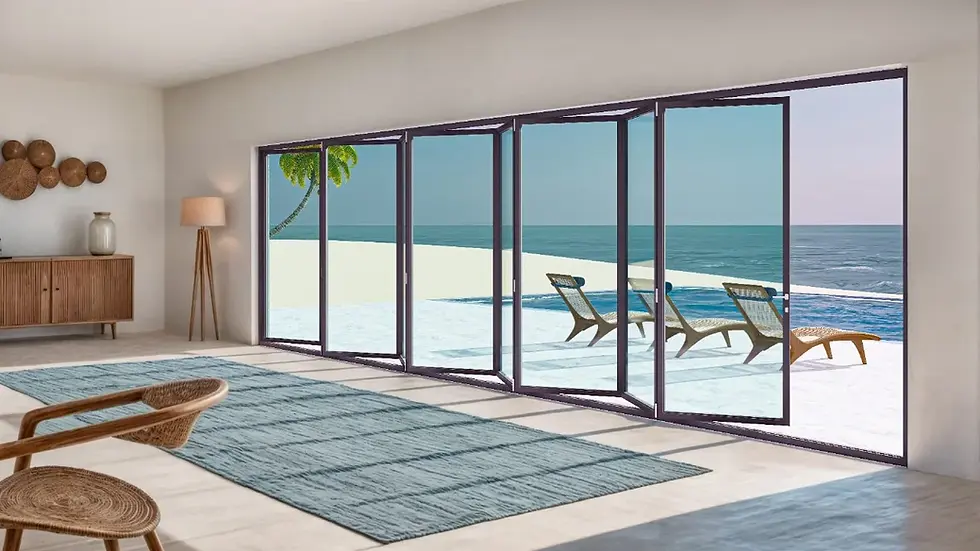
Outdoor living in New Jersey means four distinct seasons — hot, humid summers and cold, snowy winters. When you’re discussing a pergola enclosure that’s meant to be used year-round or for extended portions of the year, a major decision is whether the glass you use should be insulated or non-insulated. This choice influences thermal comfort, energy performance, comfort, cost, and long-term usability.
As someone who helps homeowners and designers navigate these technical decisions, let’s explore what each glass type actually does, why that matters in real world conditions, and when each choice makes sense.
Understanding the Basics: What Is Insulated Glass?
Insulated glass — often referred to as an Insulating Glass Unit (IGU) — consists of two or more panes of glass separated by a sealed cavity filled with air or an inert gas like argon. This multi-layer design reduces heat transfer between interior and exterior environments by creating a barrier that resists thermal conduction, convection, and radiation. It’s similar in principle to how a thermos slows heat flow. (TBK Metal Co., Ltd.)
By contrast, non-insulated glass is typically a single pane or basic assembly without a gas-filled cavity. It lets heat move more freely between inside and outside.
Performance Differences: What the Numbers Mean
Real thermal performance is often expressed in U-values (heat transfer rate) and R-values (resistance to heat flow). Higher insulation performance is indicated by lower U-values and higher R-values. (evermadeglass.com)
Non-insulated glass has minimal insulating capacity — heat moves easily through the material.
Insulated glass units, especially those with argon fill and Low-E coatings, significantly slow heat transfer and help retain conditioned air in an enclosed space. (TBK Metal Co., Ltd.)
In practical terms, an insulated panel can feel dramatically more comfortable on cold or hot days because it reduces extreme temperature swings inside the enclosure.
Why It Matters for Pergolas in New Jersey
New Jersey’s climate has wide seasonal variations — an aspect that’s crucial when sizing and selecting materials for pergola enclosures.
Cold Winters
Non-insulated glass will allow significant heat to escape during cold snaps. This leads to rapid cooling of the space and drafts, making the pergola less usable without continuous heating. In contrast, insulated glass helps maintain interior comfort by slowing this heat loss, lowering demand on heating systems, and creating a more stable micro-climate inside your enclosure. (reachbuilding.com)
Hot Summers
During peak summer heat, non-insulated glass alone can amplify heat gain from sunlight, potentially turning your pergola into a greenhouse-like space that becomes uncomfortably warm. Insulated units, especially when paired with Low-E glass coatings, can reflect some solar heat back and reduce the temperature swings inside the enclosure. (Solar Innovations)

Comfort and Usability Considerations
Year-Round Use vs Seasonal Use
Think about how you really want to use your pergola:
If the intention is year-round enjoyment, insulated glass makes more sense because it increases comfort across seasons.
If the pergola will be used primarily in mild weather and not heated or cooled, non-insulated glass might be acceptable and more budget-friendly.
Noise and Condensation
Insulated glass also improves sound dampening — something that can matter in suburban areas where street noise can be noticeable. It also helps reduce interior condensation issues because the inner pane stays closer to ambient interior temperatures. (TBK Metal Co., Ltd.)
Initial Cost vs Long-Term Value
Insulated glass typically has a higher upfront cost because of the complexity of the sealed unit, inert gas fills, and coatings. However, the long-term value comes from energy savings, improved comfort, and increased usability across seasons — aspects that often outweigh the initial price difference, especially in climates with large temperature swings. (reachbuilding.com)
When Non-Insulated Glass Makes Sense
There are situations where non-insulated glass is a practical choice:
You’re building a shade-focused pergola primarily for summer comfort in mild locations.
The enclosure is meant as a transitional space, not a year-round living area.
You pair the pergola with other shading solutions (like zipscreens or vertical shades), which themselves reduce solar heat gain during peak conditions.
You’re balancing a budget and prioritizing lower upfront cost for basic coverage.
In these cases, especially if use is limited to moderate seasons and shading devices are employed to control heat gain, a non-insulated approach can still be functional and comfortable.
Choosing Based on Your Pergola Use Case
Here’s a simple rule of thumb based on real usage patterns:
Year-Round Comfort & Stability: Insulated glass is typically the best choice.
Seasonal or Summer-Focused Use: Non-insulated glass is reasonable when combined with shade strategies like zipscreens or vertical shades.
These shading systems (zipscreens and vertical shades) can significantly alter thermal behavior by actively blocking solar heat and glare, and they complement the choice of glass rather than replace it.

Role of a Glass Supplier in New Jersey
As a glass supplier in New Jersey, one of our key jobs is to help you balance performance, cost, and the way you intend to use your pergola space. We look at seasonal exposure, orientation, shading plans, and expected usage patterns when recommending glass types. Each decision should be rooted in climate realities and functional use, rather than just aesthetics.
When deciding between insulated and non-insulated glass for a pergola enclosure, there’s no universal answer — it depends on comfort expectations, climate, seasons of use, and long-term performance. Insulated glass provides better year-round thermal comfort, reduced energy exchange, and a more stable environment, while non-insulated glass can be suitable for seasonal use or budget-minded projects, especially when paired with shading like zipscreens or vertical shades.
For a personalized recommendation based on your specific pergola design, orientation, and location in New Jersey, feel free to reach out — call or WhatsApp us at 833-774-8589 for expert guidance or a detailed quotation that includes all our pergolas and shading solutions.
References
Benefits of insulated glass in minimizing heat transfer and stabilizing interior climates. (reachbuilding.com)
Technical overview of IGUs and thermal performance advantages. (TBK Metal Co., Ltd.)
Performance factors like U-value and gas fills in glass insulation. (evermadeglass.com)
Low-E coatings and thermal properties in glazing. (Solar Innovations)


Comments